Key takeaway: When a pipe bursts, shut off the main water valve first, then cut power to any wet area if you can do it safely, move belongings out of the water, take photos for insurance and call a plumber. Acting in the first few minutes limits most of the damage.
The first 5 minutes: step by step
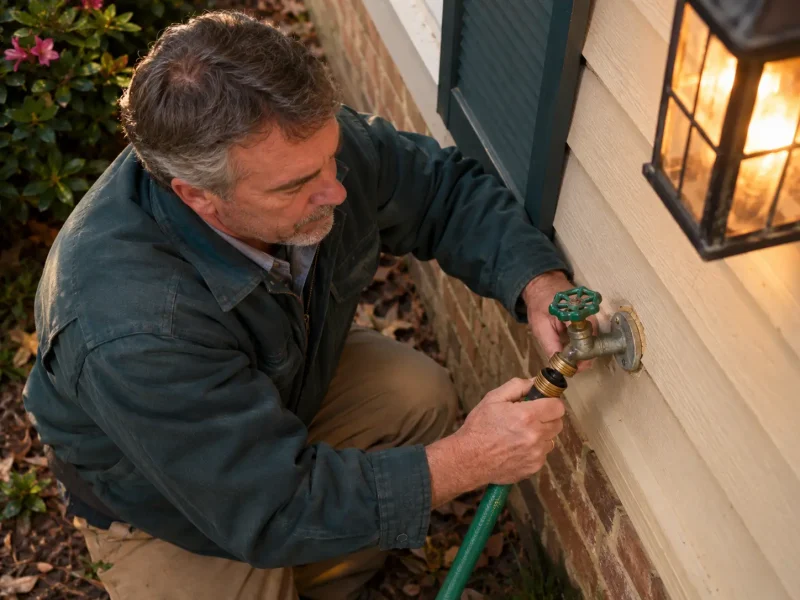
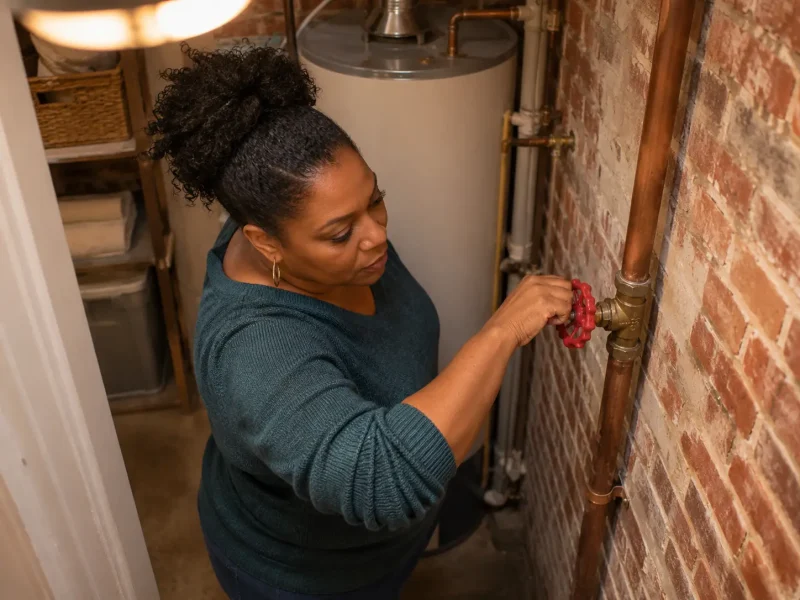
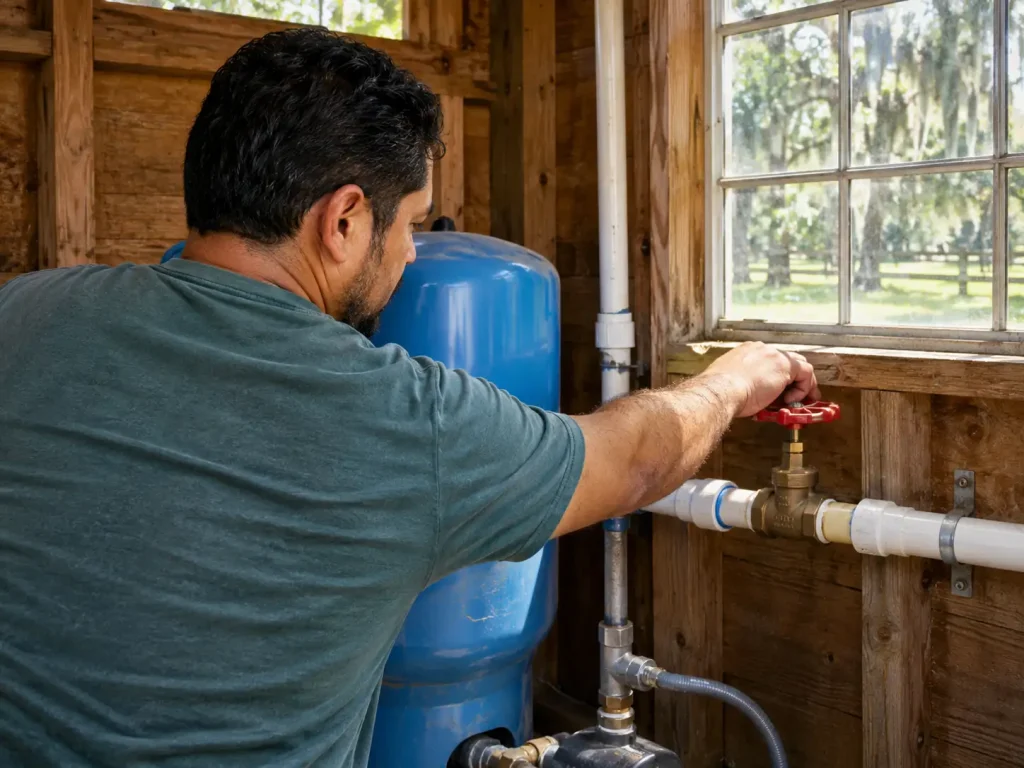
- Shut off the main water valve. Turn a round wheel handle clockwise until it stops, or turn a lever a quarter turn so it sits across the pipe. If you cannot find it, see how to shut off your main water valve.
- Make it safe. If water is near outlets, appliances or the electrical panel, switch off the breakers for that area, but only if you can reach the panel without standing in water.
- Drain the lines. Open the lowest faucet in the house and flush toilets once to empty the remaining water from the pipes.
- Turn off the water heater. With the water off, switch off an electric heater’s breaker or set a gas heater to Off so it does not run empty.
- Move belongings. Lift furniture, rugs, electronics and papers out of the water.
- Call a plumber. Tell them where the break is and that the water is off.
How urgent is your burst pipe?
Match what you see to one of these four cards. It tells you what to do in the next few minutes.
- Call now
Water still running after a break
Close the main valve first, then call a plumber. - Call now
Water reaching outlets, lights or appliances
Stay out of the water. Cut power at the breaker only if you can reach it dry. - Same day
The water is off and the leak has stopped
Dry the area and book a same-day repair so you can turn the water back on. - Can wait
A small weep at a fitting you can see
Catch the drip and book a regular visit. Check it every few hours.
Is it safe to turn off the electricity?
Only if you can reach the breaker panel while standing on a dry floor. If water is around the panel, or you would have to walk through water near outlets, stay out of that area and call the power company or 911. Never touch electrical equipment while standing in water.
Where is the leak coming from?
| What you see | Where the break usually is |
|---|---|
| Water dripping from the ceiling | A pipe in the ceiling or the floor above |
| A growing wet spot on a wall | A supply line inside the wall |
| Water spreading from under a sink or appliance | A supply line, valve or connector |
| Water under the house or a wet crawl space | A pipe in the crawl space, often after a freeze |
How to document damage for insurance
- Take photos and video of the break, the water and damaged items before you clean up
- Keep damaged items until the adjuster has seen them, or photograph them before throwing them away
- Keep the plumber’s invoice showing the cause of the break
- Write down the date, time and what you did to stop the water
What policies usually cover is explained in burst pipes and home insurance.
How to dry out and stop mold
- Mop or wet-vac standing water as soon as the water is off
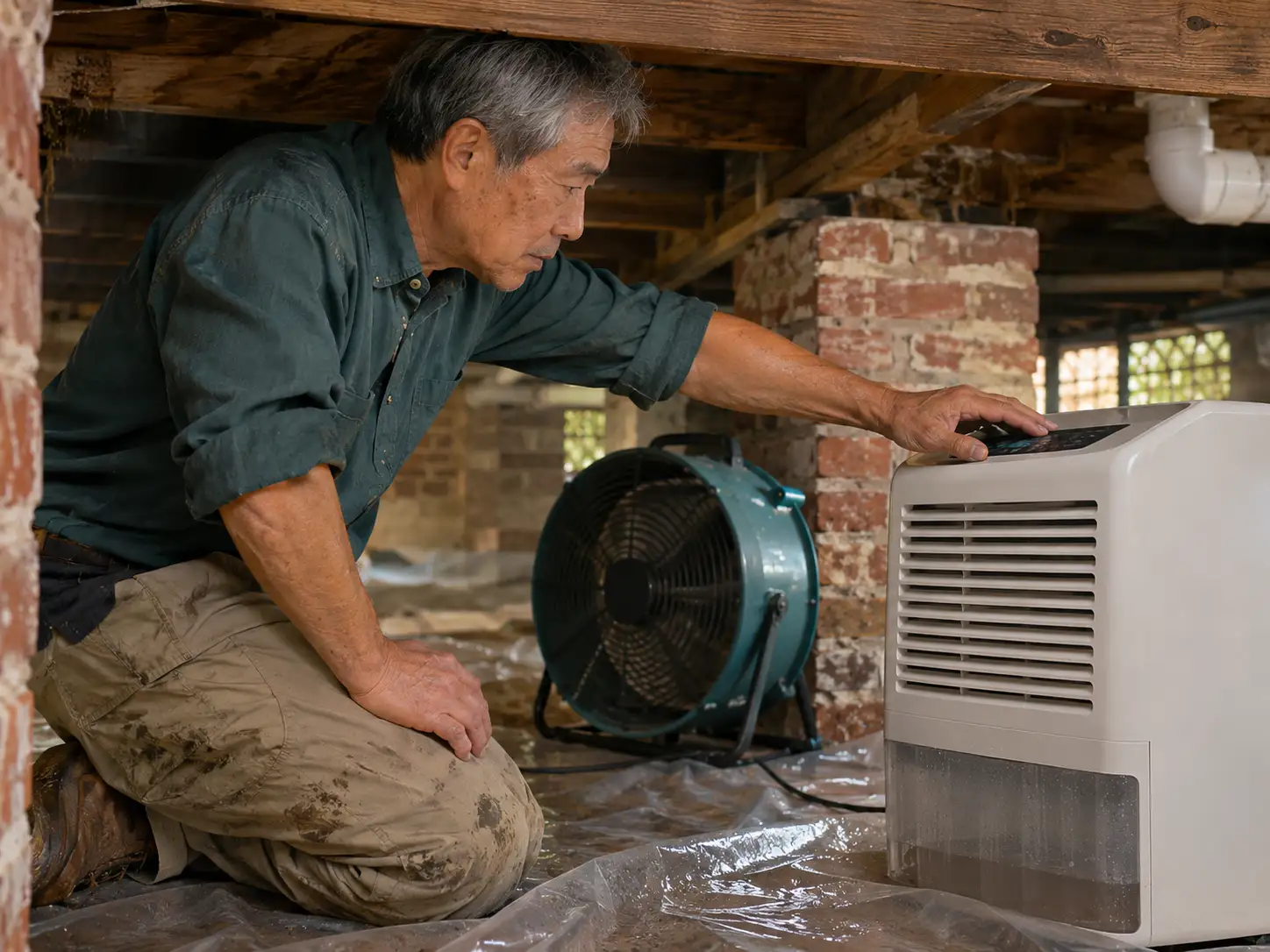
- Run fans and a dehumidifier, and open windows if the air outside is dry
- Pull wet rugs and padding up off the floor
- Call a water damage company if water soaked into walls, ceilings or subfloors
Mold can start growing on materials that stay wet for 24 to 48 hours, so drying fast matters (U.S. EPA).
When to call an emergency plumber
Call right away for any burst pipe, even after the water is off: the house has no water until the pipe is repaired, and a split pipe can have hidden damage nearby. See burst pipe repair in Augusta for how the repair works.
Sources: U.S. Environmental Protection Agency, A Brief Guide to Mold, Moisture and Your Home (dry within 24 to 48 hours).