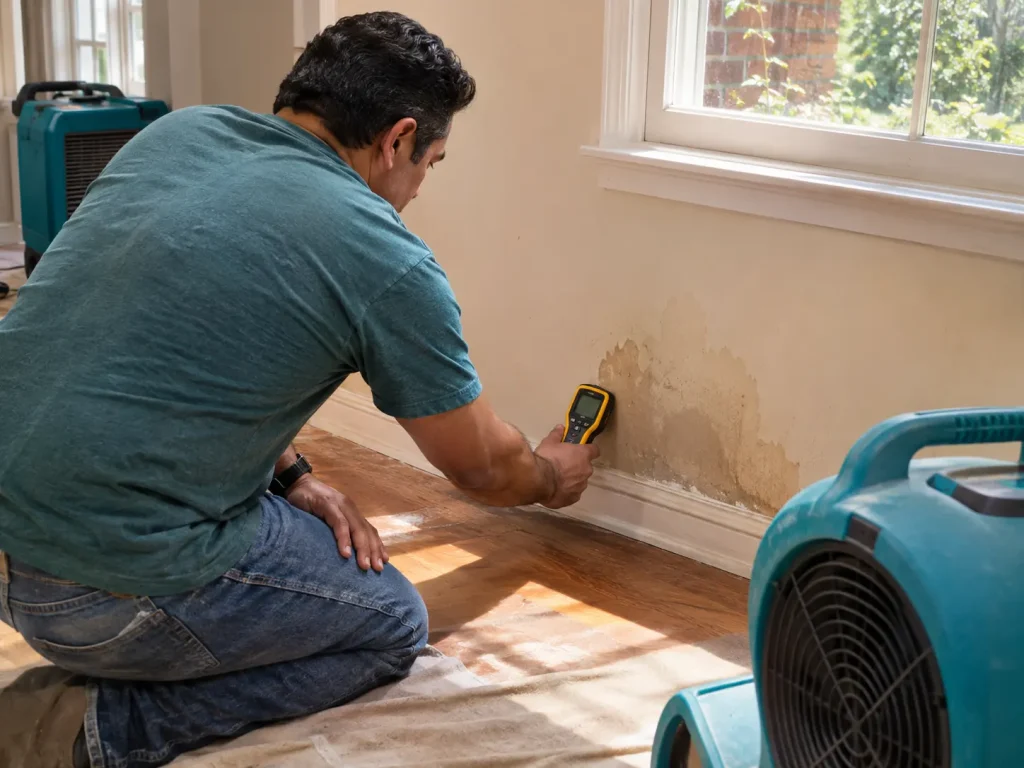
Key takeaway: The clearest sign of a hidden water leak is a water meter that keeps moving when every fixture is off. Other signs are a higher water bill, damp or warm spots on floors, stains on walls or ceilings, a musty smell and the sound of running water. The meter test below takes a few minutes.
Top signs of a hidden leak
- Your water bill is higher than usual with no change in use
- The water meter moves with everything turned off
- A warm spot on a tile or concrete floor (often a hot water line under the slab)
- Damp carpet, swollen baseboards or warped flooring
- Stains, bubbling paint or peeling wallpaper
- A musty smell or mold in one area
- The sound of running water when nothing is on
- Cracks in the floor or walls that are new
How urgent is your hidden leak?
Not every hidden leak is an emergency, but some are. Match your sign to a card below.
- Call now
Water seeping up through the floor
Shut off the main valve and call now. - Call now
A wet ceiling or wall that keeps growing
A pipe inside is leaking. Shut off the water and call. - Same day
A warm spot on the floor
Possibly a hot water slab leak. Book leak detection soon. - Can wait
A high bill with no other signs
Do the water meter test first, then book a regular visit if it moves.
The water meter test, step by step
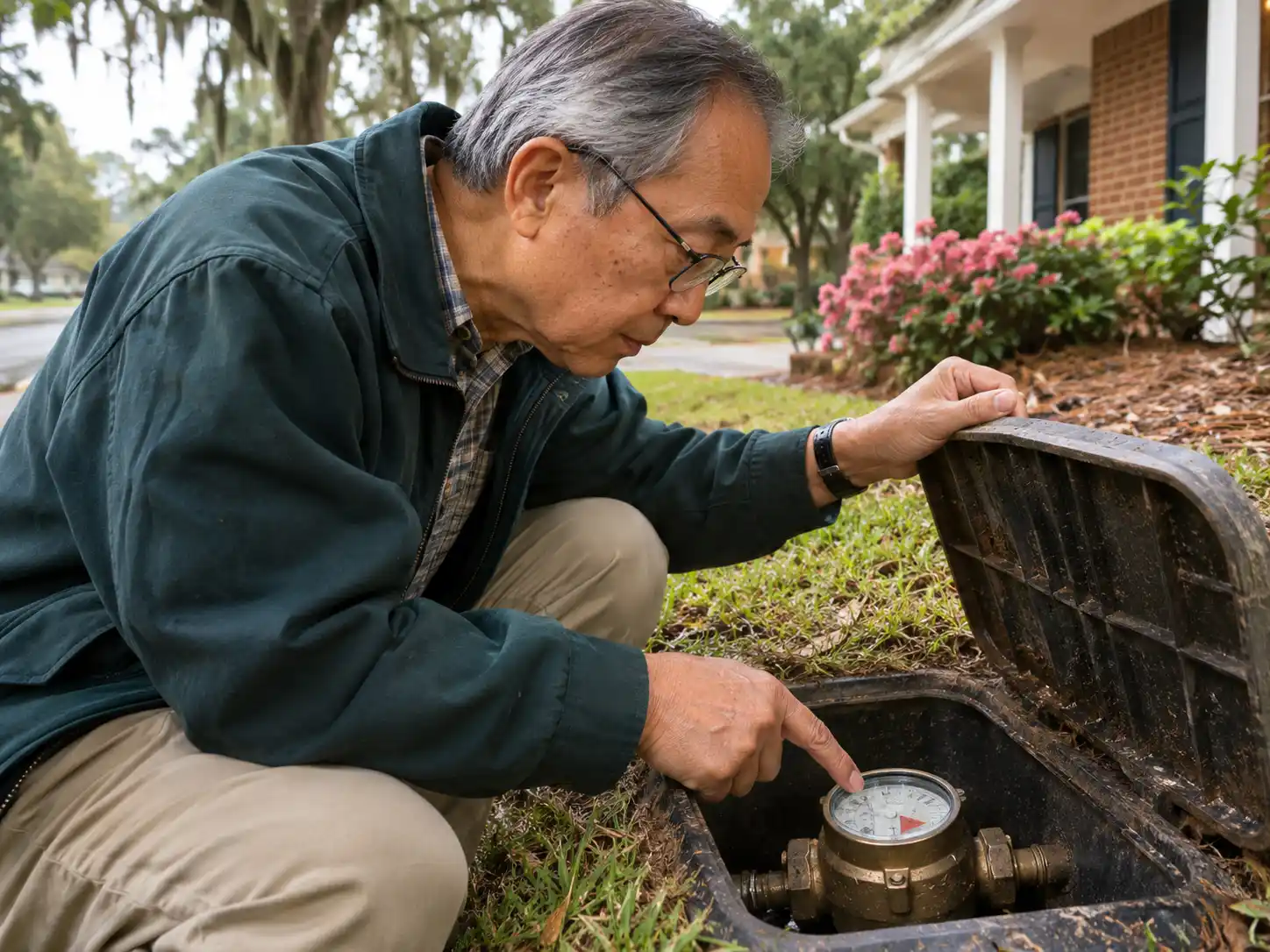
- Turn off every faucet, appliance, irrigation system and ice maker. Make sure no toilet is refilling.
- Find your water meter, usually in a box near the street. Lift the lid carefully.
- Look at the leak indicator (a small triangle or dial) and write down the reading.
- Wait 15 to 30 minutes without using any water.
- Check again. If the indicator moved or the reading changed, water is leaking somewhere.
- To narrow it down, close the main valve at the house and check again: if the meter still moves, the leak is in the line between the meter and the house.
Toilet leaks: a quick dye test
A running toilet is the most common hidden leak. Put a few drops of food coloring in the tank and wait 15 minutes without flushing. If color appears in the bowl, the flapper is leaking.
Slab leak signs vs wall leak signs
| Slab leak (under the floor) | Wall or ceiling leak |
|---|---|
| Warm or damp spots on the floor | Stains or bubbling paint on walls or ceilings |
| Water heater running more than usual | Swollen baseboards or trim |
| Cracks in flooring or the slab | Musty smell in one room |
| Sound of water under the floor | Drips heard inside the wall |
Where hidden leaks start most often
- Supply lines to toilets, sinks, dishwashers and ice makers
- The water heater and its connections, especially in attics and closets
- Shower valves and tub drains inside the wall
- Pipes under a concrete slab, often the hot water line
- The water service line between the meter and the house
What to do after you confirm a leak
- Write down the meter reading and the time, so you can show how fast water is being lost.
- Close the main valve if you see water damage, or if the meter moves fast.
- Check the easy places first: under every sink, behind each toilet and around the water heater.
- Call for leak detection if you cannot find it. A plumber can test the lines and find the spot before opening a wall or floor.
- Take photos of any stains or damage for your records and your insurance company.
Small hidden leaks can run for months. Doing the meter test once a season is an easy way to catch one early. See slab and hidden leak repair.
When to call for leak detection
If the meter test shows a leak and you cannot find it, or you see slab leak signs, a plumber can pinpoint it with pressure testing, acoustic equipment and thermal imaging before opening any floor or wall. See slab and hidden leak repair.